- Mon - Fri 8:00 - 16:30
- +66(0)2 889-2138 ext 6101-3
- Headegch@mahidol.ac.th


Asst.Prof.Dr. Poomiwat Phadungbut
ผู้ช่วยศาสตราจารย์ ดร.ภูมิวัต ผดุงบุตร
Office
Room, 3rd floor, Engineering Building 1
Phone
(02)889-2138 ext 6101-3, 6115
poomiwat.pha@mahidol.ac.th
Research Group
CERES Lab (Cybernetics-driven Engineering Research for Sustainability Laboratory), CoReTechLab (Carbon Conversion Research and Technology Laboratory)
Scopus / ORCID / MUREX :
https://www.scopus.com/authid/detail.uri?authorId=56388766900
https://scholar.google.com/citations?user=DkDq5mYAAAAJ&hl=th
Research Interests
- Molecular simulation in chemical engineering
- Statistical molecular thermodynamics
- Artificial intelligence-based modeling
- Adsorption
- Carbon capture and storage technology
- Net-Zero petroleum production engineering
Education
- D., Chemical Engineering, Suranaree University of Technology, 2016
- Eng., Chemical Engineering, Suranaree University of Technology, 2011
Teaching
- EGCH 201 Chemical Engineering Principles and Calculations
- EGCH 203 Chemical Engineering Thermodynamics I
- EGCH 397 Seminar
- EGCH 491 Chemical Engineering Project
- EGCH 499 Chemical Engineering Capstone Design Project
- EGCG 101 Chemical Engineering Principles and Calculations
- EGCG 201 Chemical Engineering Thermodynamics I
- EGCG 498 Capstone Design Project I
- EGCG 499 Capstone Design Project II
- EGCH 625 Artificial Intelligence, Data Analytics and Computational Techniques in Integrated Chemical Engineering
- EGCH 626 Thermodynamics and Energy Technology
- EGCH 706 Advanced Artificial Intelligence, Data Analytics and Computational Techniques in Integrated Chemical Engineering
- EGCH 709 Advanced Engineering Thermodynamics and Green Technology
Selected Publications
- M. Tun, S. Keawmaungkom, S. Srimongkol, P. Kunnam, B. Chayasombat, P. Muthitamongkol, P. Wiroonpochit, K. Tapracharoen, P. Phadungbut, S. Srisawadi, Onion‐Like Progressive Tunneling Model for Predicting Electrical Conductivity in Carbon Black‐Filled Natural Rubber Composites, Journal of Applied Polymer Science, 143 (2026) e58126.
- Sawatdee, A. Botalo, P. Pongchaikul, P. Posoknistakul, P. Phadungbut, P. Intra, B. Charnnok, N. Chanlek, P. Photongkam, N. Laosiripojana, Design of Multilayer Cellulose-Based Filters Combined with Zeolitic Imidazole Framework and Silica Nanoparticles for Particulate Matter Filtration and Antibacterial Properties, ACS Sustainable Chemistry & Engineering, 13 (2025) 7074-7087.
- Klomkliang, N. Threerattanakulpron, W. Wongsombat, P. Phadungbut, S. Chaemchuen, S. Supasitmongkol, J. Serafin, L.F.H. Diaz, Experimental and molecular simulation study of CO2 adsorption in ZIF-8: Atomic heat contributions and mechanism, Journal of Industrial and Engineering Chemistry, 145 (2025) 831-841.
- Neamsung, N. Kitjanukit, A. Karawek, N. Chongkol, N. Lertthanaphol, P. Chotngamkhum, K. Khumsupa, P. Phadungbut, W. Jonglertjunya, P. Kim-Lohsoontorn, Effects of alkanolamines on photocatalytic reduction of carbon dioxide to liquid fuels using a copper-doped dititanate/graphene photocatalyst, RSC Sustainability, 3 (2025) 3520-3529.
- M. Tun, S. Chinkanjanarot, S. Srinives, W. Jonglertjunya, N. Klomkliang, P. Phadungbut, Depressurization-induced production of shale gas in organic-inorganic shale nanopores: A kinetic Monte Carlo simulation, International Journal of Thermofluids, 24 (2024) 100879.
- Jonglertjunya, H.M. Tun, N. Khumphum, K. Charoenta, S. Chinkanjanarot, S. Srinives, N. Klomkliang, P. Phadungbut, Adsorption capability and regenerability of carbon slit micropores for CO2 capture, International Journal of Thermofluids, 23 (2024) 100781.
Pictures
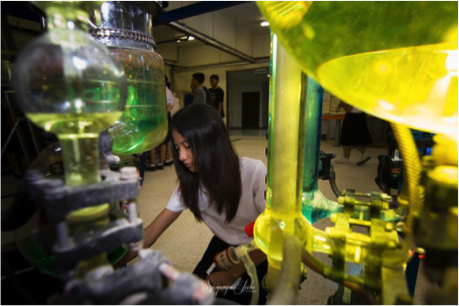
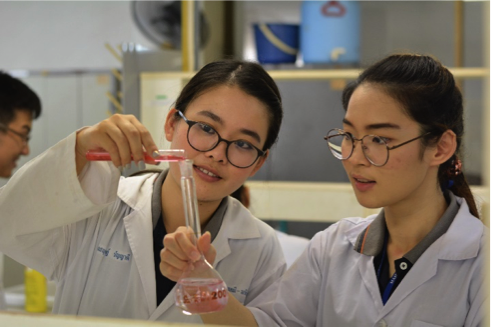
- Research/labs photos
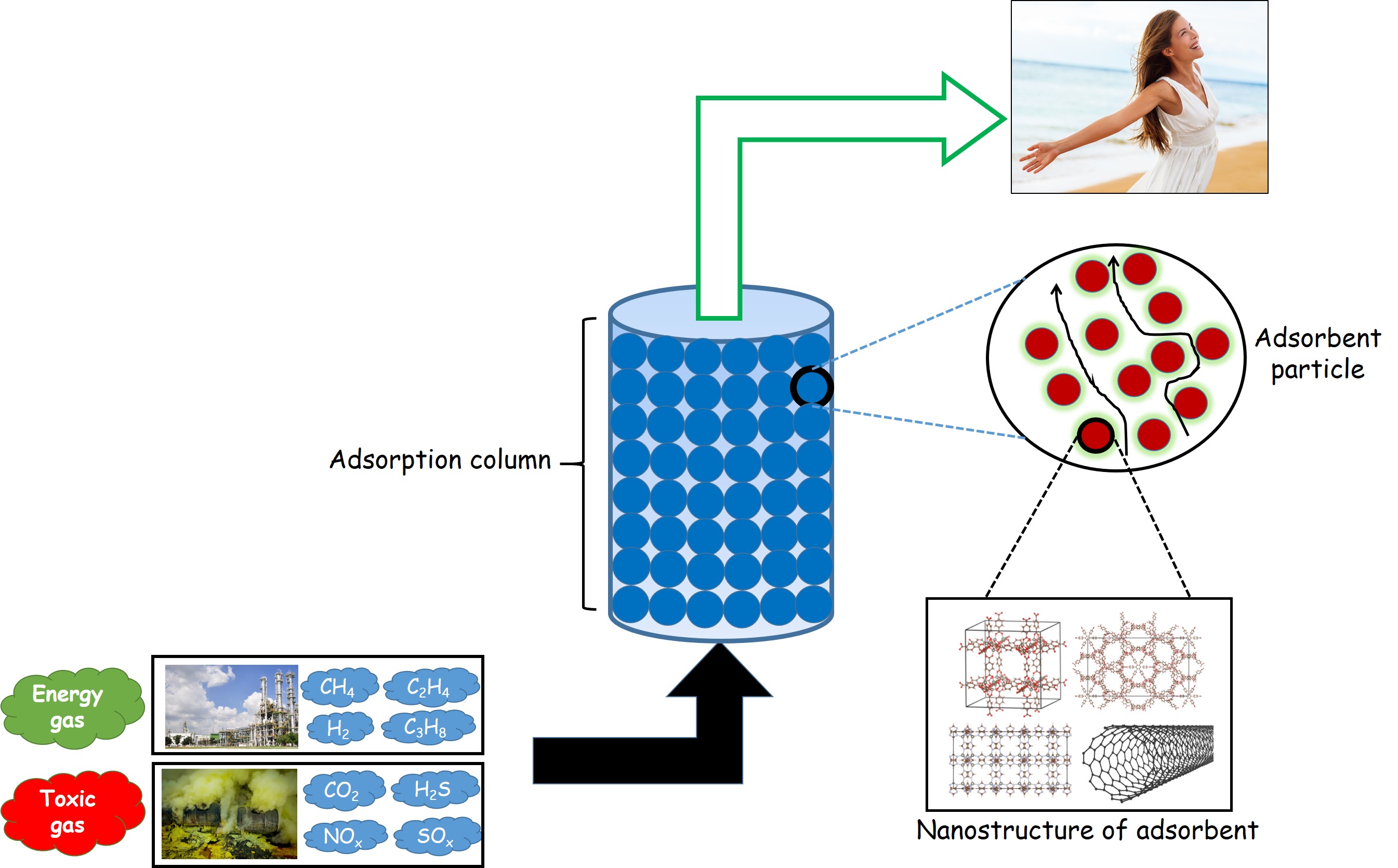
My research is currently focused on the development of molecular simulation to tailor the nanostructure of porous and nonporous materials and select the appropriate materials for specific applications such as the storage of energy gases and capture of toxic gases. By performing molecular simulation, it allows us to understand particular phenomena and properties of substances microscopically which cannot be observed by the experimental work. In addition to that, other keys of employing molecular simulation are to reduce experimental effort and material and energy consuming before actual production of materials. Therefore, the target of my research is to design and refine the performance of any processes by deep problem solving from nanoscale to industrial scale.
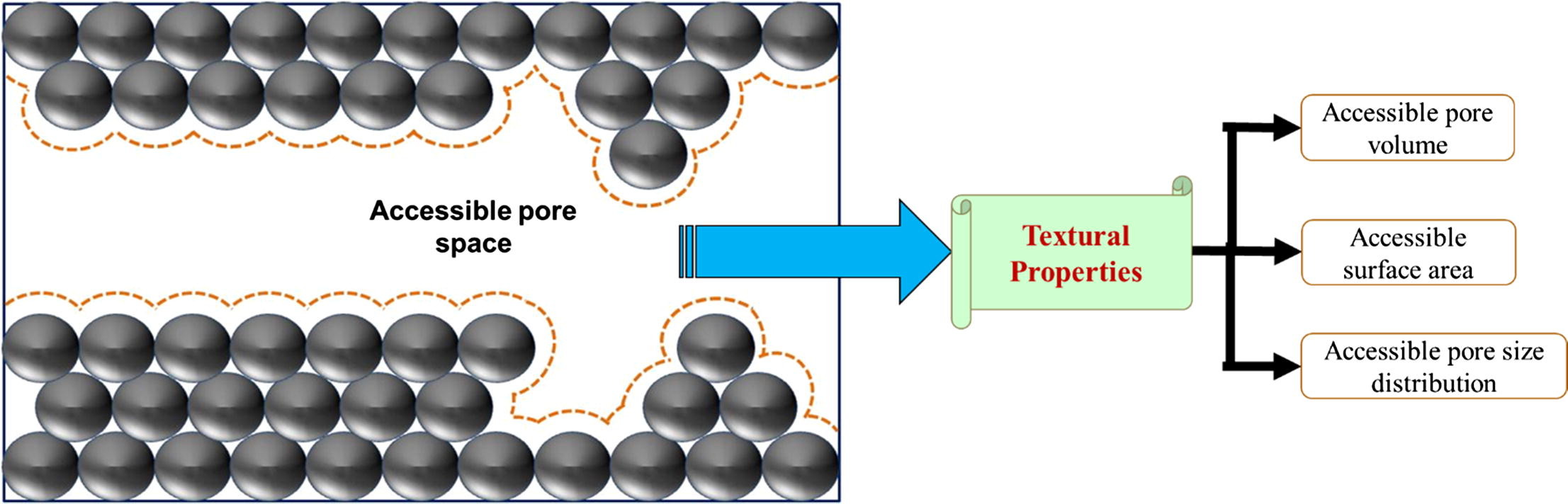
My recently published research is related to textural characterization of porous materials having any arbitary structure without relying on gas adsorption technique. Extension of this method will be examined to other porous materials and applied to the lab-made materials.
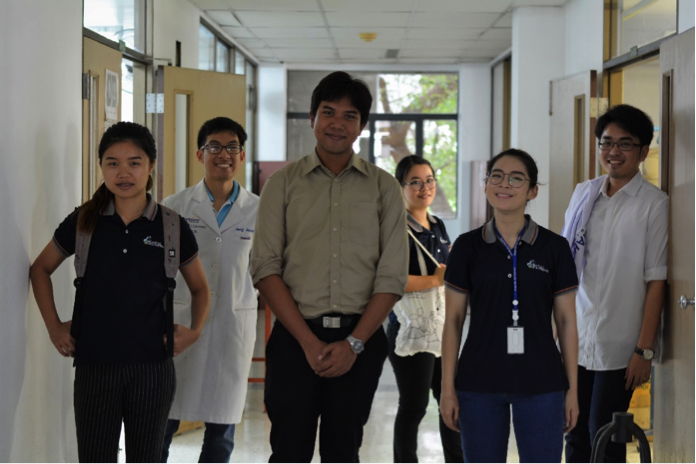
- Research/labs team
- Photos that you impressed (for sharing on the website)